

"...now look around you carefully and see with your own eyes what I will not describe, for if I did, you wouldn't believe my words."
Monday, May 23, 2016

Saturday, May 21, 2016

Thursday, May 5, 2016
Fun Home by Alison Bechdel

A new kind of book for me - both as a graphic novel and as what I would call an archival memoir. Bechdel picks apart her own life to an intense extent in an attempt, I think, to make sense of it or perhaps to elevate it to the level of art.
Often I didn't appreciate this meticulous detailing followed by a forceful insistence on the meaning of those details. It seemed incredibly heavy-handed. I still feel that way about this book.
But there were moments of brilliance in reading this. Most of these moments concerned the author's father. I loved the sketch of him on the first page.

In general, this is a book about the author's father and the family he created. It's about that curious fact of how we are intimately connected with our parents - but so unaware of them as the individuals they were before us. If we chose to try and discover who that person was - that's something we don't do until much later in our lives or perhaps we never pursue that knowledge. It is an age old question: can I understand myself without understanding where/who I come from?
This book is also about sexuality. Homosexuality was what tied the author to her father most - he was a closeted gay man. It is unclear whether exploring sexuality is this books prime objective or a byproduct of an attempt to understand her father and his suicide. Either way, sexuality is a major character in this book.
A homosexual is someone who lives outside of what many consider to be the norm. Whatever the truth is, this author alludes to the strength this marginalization gives to a homosexual. I don't know if I believe this. Lately, I've been thinking about what it means to be an outsider. To me it always means that you experience life in a way many people are not familiar with and do no account for. There are MANY different ways of being an outsider. Only some of them are truly substantial - by that I mean based on something that is a mainstay of your character. For example, there are people who dress differently and this brings them a certain amount of attention - they may be viewed as different or an outsider based on their appearance. But this is a transitory, superficial consideration of that individual - next year it may be completely obsolete. However, if you are a homosexual or perhaps autistic - what makes you an outsider will always be there. The basis of your outsiderness is a fundamental part of your character and so it cannot be shed. Perhaps, you want to shed it but if you feel that way you are going to be miserable.
However, whether your outsiderness is superficial or subterranean in and of itself it does not make you an elevated individual. You are not necessarily special because of your uniqueness. This seems strange and I have often been tantalized into concluding that, yes, "I am special because I am unique in this way." I think Bechdel wants to do the same thing based on her sexual identity. She talks about how homosexual people have been responsible for great leaps forward in social thought or have supported radical artists that eventually were appreciated for their great abilities. She wants to believe that only homosexual people could have taken those chances because they live on the outskirts of society.
Don't get me wrong - I think that being marginalized sometimes does inevitably lead you to be more open to radicalness in many ways. But, as always, it's always about the individual as a whole. You're not only a homosexual, you are a woman, you are a caucasian, you are of this belief or that class or this personality, etc. You cannot separate the parts from the whole when getting to know a person.
I'm easily tempted into simple solutions, thoughts, paths, etc. I always have been this way and it is a colossal habit to try and alter in any way. But these days, for a long while really, I know that this quality does not serve me. It serves me up to all kinds of trouble/mistakes/devastation/regrets. So I was wary of accepting Bechdel's conclusions about sexuality at times.
But it was clear that it was the common ground between her and her father. That I did understand and didn't question. Her conversations with him about sexuality or her musings about his life experiences as a gay man were the best parts of this book. And who doesn't appreciate family drama? This is a good story about that topic. I'm glad I read it - but it was not a great novel or anything. Mostly, I'm glad I attempted something new.
Today's Letter
I read something today that affected me. Times are stranger and stranger these days - and I wanted to share this because it seemed like it made sense a midst the chaos.
This is the preface to "Tropic of Cancer" written by Anais Nin.
Something to keep in - the author of "Tropic of Cancer" is Henry Miller. Anais Nin was Henry Miller's lover for many years. So, to be explicit, she is writing about the work of a man she is intimately involved with.
Here is a book which, if such a thing were possible, might restore our appetite for the fundamental realities. The predominant note will seem one of bitterness, and bitterness there is, to the full. But there is also a wild extravagance, a mad gaiety, a verve, a gusto, at times almost a delirium. A continual oscillation between extremes, with bare stretches that taste like brass and leave the full flavor of emptiness. It is beyond optimism or pessimism. The author has given us the last frisson. Pain has no more secret recesses.
In a world grown paralyzed with introspection and constipated by delicate mental meals this brutal exposure of the substantial body comes as a vitalizing current of blood. The violence and obscenity are left unadulterated, as manifestation of the mystery and pain which ever accompanies the act of creation.
The restorative value of experience, prime source of wisdom and creation, is reasserted. There remain waste areas of unfinished thought and action, a bundle of shreds and fibers with which the overcritical may strangle themselves. Referring to his Wilhelm Meister Goethe once said, "People seek a central point: that is hard, and not even right. I should think a rich, manifold life, brought close to our eyes would be enough without any express tendency; which, after all, is only for the intellect."
The book is sustained on its own axis by the pure flux and rotation of events. Just as there is no central point, so also there is no question of heroism or of struggle since there is no question of will, but only a obedience to flow.
The gross caricatures are perhaps more vital, "more true to life," than the full portraits of the conventional novel for the reason that the individual today has no centrality and produces not the slightest illusion of wholeness. The characters are integrated to the false, cultural void in which we are drowning; thus is produced the illusion of chaos, to face which requires the ultimate courage.
The humiliations and defeats, given with a primitive honesty, end not in frustration, despair, or futility, but in hunger, and ecstatic, devouring hunger - for more life. The poetic is discovered by stripping away the vestiture of art; by descending to what might be styled "a preartistic level,
the durable skeleton of form which is hidden in the phenomena of disintegration reappears to be transfigured again in the ever-changing flesh of emotion. The scars are burned away - the scars left by the obstetricians of culture. Here is an artist who reestablishes the potency of illusion by gaping at the open wounds, by courting the stern, psychological reality which man seeks to avoid through recourse to the oblique symbolism of art. Here the symbols are laid bare, presented almost as naively and unblushingly by this over-civilized individual as by the well-rooted savage.
It is no false primitivism which gives rise to this savage lyricism. It is not a retrogressive tendency, but a swing forward into unbeaten areas. To regard a naked book such as this with the same critical eye that is turned upon even such diverse types as Lawrence, Breton, Joyce and Celine is a mistake. Rather let us try to look at it with the eyes of a Patagonian for whom all that is sacred and taboo in our world is meaningless. For the adventure which has brought the author to the spiritual ends of the earth is the history of every artist who, in order to express himself, must traverse the intangible gridirons of his imaginary world. The air pockets, the alkali wastes, the crumbling monuments, the putrescent cadavers, the crazy jig and maggot dance, all this forms a grand fresco of our epoch, done with shattering phrases and loud, strident, hammer strokes. [my emphasis]
If there is here revealed a capacity to shock, to startle the lifeless ones from their profound slumber, let us congratulate ourselves; for the tragedy of our world is precisely that nothing an longer is capable of rousing it from its lethargy. No more violent dreams, no refreshment, no awakening. In the anaesthesia produced by self-knowledge, life is passing, art is passing, slipping from us: we are drifting with time and our fight is with shadows. We need a blood transfusion.
And it is blood and flesh which are here given us. Drink, food, laughter, desire, passion, curiosity, the simple realities which nourish the roots of our highest and vaguest creations. The superstructure is lopped away. This book brings with it a wind that blows down the dead and hollow trees whose roots are withered and lost in the barren soil of our times. This book goes to the roots and digs under, digs for subterranean springs.
-Anaïs Nin
1934
This is the preface to "Tropic of Cancer" written by Anais Nin.
Something to keep in - the author of "Tropic of Cancer" is Henry Miller. Anais Nin was Henry Miller's lover for many years. So, to be explicit, she is writing about the work of a man she is intimately involved with.
Here is a book which, if such a thing were possible, might restore our appetite for the fundamental realities. The predominant note will seem one of bitterness, and bitterness there is, to the full. But there is also a wild extravagance, a mad gaiety, a verve, a gusto, at times almost a delirium. A continual oscillation between extremes, with bare stretches that taste like brass and leave the full flavor of emptiness. It is beyond optimism or pessimism. The author has given us the last frisson. Pain has no more secret recesses.
In a world grown paralyzed with introspection and constipated by delicate mental meals this brutal exposure of the substantial body comes as a vitalizing current of blood. The violence and obscenity are left unadulterated, as manifestation of the mystery and pain which ever accompanies the act of creation.
The restorative value of experience, prime source of wisdom and creation, is reasserted. There remain waste areas of unfinished thought and action, a bundle of shreds and fibers with which the overcritical may strangle themselves. Referring to his Wilhelm Meister Goethe once said, "People seek a central point: that is hard, and not even right. I should think a rich, manifold life, brought close to our eyes would be enough without any express tendency; which, after all, is only for the intellect."
The book is sustained on its own axis by the pure flux and rotation of events. Just as there is no central point, so also there is no question of heroism or of struggle since there is no question of will, but only a obedience to flow.
The gross caricatures are perhaps more vital, "more true to life," than the full portraits of the conventional novel for the reason that the individual today has no centrality and produces not the slightest illusion of wholeness. The characters are integrated to the false, cultural void in which we are drowning; thus is produced the illusion of chaos, to face which requires the ultimate courage.
The humiliations and defeats, given with a primitive honesty, end not in frustration, despair, or futility, but in hunger, and ecstatic, devouring hunger - for more life. The poetic is discovered by stripping away the vestiture of art; by descending to what might be styled "a preartistic level,
the durable skeleton of form which is hidden in the phenomena of disintegration reappears to be transfigured again in the ever-changing flesh of emotion. The scars are burned away - the scars left by the obstetricians of culture. Here is an artist who reestablishes the potency of illusion by gaping at the open wounds, by courting the stern, psychological reality which man seeks to avoid through recourse to the oblique symbolism of art. Here the symbols are laid bare, presented almost as naively and unblushingly by this over-civilized individual as by the well-rooted savage.
It is no false primitivism which gives rise to this savage lyricism. It is not a retrogressive tendency, but a swing forward into unbeaten areas. To regard a naked book such as this with the same critical eye that is turned upon even such diverse types as Lawrence, Breton, Joyce and Celine is a mistake. Rather let us try to look at it with the eyes of a Patagonian for whom all that is sacred and taboo in our world is meaningless. For the adventure which has brought the author to the spiritual ends of the earth is the history of every artist who, in order to express himself, must traverse the intangible gridirons of his imaginary world. The air pockets, the alkali wastes, the crumbling monuments, the putrescent cadavers, the crazy jig and maggot dance, all this forms a grand fresco of our epoch, done with shattering phrases and loud, strident, hammer strokes. [my emphasis]
If there is here revealed a capacity to shock, to startle the lifeless ones from their profound slumber, let us congratulate ourselves; for the tragedy of our world is precisely that nothing an longer is capable of rousing it from its lethargy. No more violent dreams, no refreshment, no awakening. In the anaesthesia produced by self-knowledge, life is passing, art is passing, slipping from us: we are drifting with time and our fight is with shadows. We need a blood transfusion.
And it is blood and flesh which are here given us. Drink, food, laughter, desire, passion, curiosity, the simple realities which nourish the roots of our highest and vaguest creations. The superstructure is lopped away. This book brings with it a wind that blows down the dead and hollow trees whose roots are withered and lost in the barren soil of our times. This book goes to the roots and digs under, digs for subterranean springs.
-Anaïs Nin
1934
Saturday, April 23, 2016
Thursday, April 14, 2016
I find this true.

I'm a very black and white person. For many years I've felt that was going to be one of my qualities that would be disruptive to my life. It's an inflexible way to think - and in this world that forces compromise, it's easy to sense how such a mindset could cause trouble.
So, if "good" and "bad" are relative terms - that is to say you cannot put those words on certain actions/things and they'll stick to them each and every time - then there's no road map to deciphering anything. Which, not so oddly, is the theme of this blog. My desire to have a key/map to make deciphering what confuses me easier because the confusion overwhelms me. Because I don't think well on my feet. No such map/key exists because nothing stays the same. The desire for one wasn't exactly what made me a poor person - but some of the things that I've stubbornly done to make it all fit in defiance of the way of things have made me a poor person.
I get frustrated assuming that I'm the worst there is - that no one else has sunk to the depths I've been able to in this life. And I've met a lot of people who have reinforced that belief (whether intentionally or not). One thing those experiences have taught me is the truth of this graphic. No one is perfect. Don't try to be perfect for anyone else. It's a zero gain venture. What matters is that your sensibilities are similar. That the problems/foibles/concerns you have are not worsened by them - that you don't bring each other down as you struggle to finds ways of living that work for you both. Same goes for other types of relationships - between yourself and your passions/hobbies/career whatever - seek for a buoyancy in them. Don't ask them to be perfect and don't ask yourself to be perfect for them. Explore the thing as it is and ask - does its demons play well with your own? And then for the hardest part - at least as far as I'm concerned - if the answer is "no" - I would have to fiddle with this situation because naturally that buoyancy is not there - then don't continue. I struggle with this because I'm not an accepting person - particularly of the things that I don't want to hear because they would blow my "map" my "plan" to smithereens. This is all I've seemed to learn so far. That these are my habits, this is what the world does in response, and what I wish I could change my course to accepting.
Saturday, March 12, 2016
Monday, January 25, 2016
The Leftovers by Tom Perrotta

What if one day random people simply vanished? Apparently, there is a precedent for this in the Bible (https://en.wikipedia.org/wiki/Rapture) - however, the Bible suggests that to be "taken" is a reflection of your true belief in God. Perrotta makes no such claim in his novel. It's random, some people disappear and some people don't and no one understands why.
Perrotta describes this novel as "a post-apocalyptic comedy." The rapture has already occurred once the book begins - so we see people trying to get on with their lives. We see the mundane realities after a life-changing, supernatural event.
Perrotta is pretty good at creating the small details of daily life - and he creates characters who respond in interesting ways. But I don't really appreciate the top-down approach he took in this novel. He created a massive event offstage and then writes of its trickling down affects on all these people's lives. It's very after the fact. I prefer a writer who can create the moment and the characters and the actions they take/thoughts they have, etc. With a book like this I feel like I'm being toyed with in a way.
The characters are this entire novel. There are few philosophical or descriptive passages for instance. So if you don't like the characters it's unlikely that you'll enjoy the book. And I didn't really like how Perrotta created his characters. Again, he takes an after the fact type approach by creating characters from the outside in. Kevin, the central character of this story, is depicted as a father/mayor/widower before you have any sense of who he really is. I suppose this makes sense in a way because everyone in this book is trying to discover how they'll adjust to this new world that was thrust on them by the rapture. Everybody is running to catch up to the new world. But I suspect that Perrotta creates characters in this way because it's a device that works for him. I just happen to think that device creates less interesting characters.
They say that we can learn more from doing something incorrectly sometimes. A mistake can reveal more than a success. I read this book because my book club chose it. I was going to skip it but decided against it and I'm kinda glad. I think the strength of this book is in its mundane details - just small things that Perrotta focuses on. He made me think about that. I've been really stressed out for a while and living in these characters heads took me out of my own. It was escapism for me - which I don't view as a good thing - but in the moment I hope it was okay.
Reading something I didn't like, made me think of what I enjoy most about reading. I like that it's apart from the world at large, moves slower, you have more time to consider what you've seen, and yet since it is rooted in real life you can learn a lot that might be of use to you in your life. At least, that's what I had hoped for before going away to college and majoring in English. I got too wrapped up in the requirements I forgot why I had chosen that goal in the first place. I'm finding that if you get too enmeshed with each step towards a goal, it's so easy to lose your motive, your purpose, and all the value that you hoped to inherit from the process. Unfortunately, I sense that knowing that isn't really helping me avoid that pitfall.
Tuesday, January 19, 2016
The Girl Who Played With Fire by Stieg Larsson
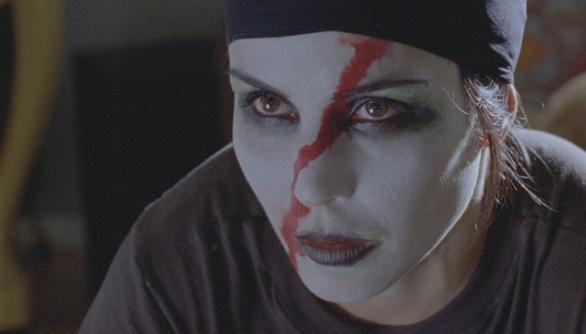


I kept reading this trilogy because I enjoyed the writing, the subject matter, and Lisbeth Salander's character. In The Girl Who Played With Fire, these only got better.
There is less of Blomkvist & Salander's relationship because they are separated at the beginning of this book and don't meet again until the last page. However, they do communicate via the internet. While this is appropriate given the events of the plot, the last two books, in a way, suffer from not being able to develop their relationship further.
So, why are the last two books in the Millenium series (The Girl Who Played With Fire & The Girl Who Kicked the Hornet's Nest) worth reading as well? In a word: Lisbeth. These books are no longer Harriet Vanger's story, they're Lisbeth's.
Lisbeth Salander makes an interesting and unique protagonist. She is in her twenties, the child of a single mother, and she has a tendency towards violence; for example after a boy beat her up in grade school she attacked him with a bat. She's affected by an unidentified mental health issue that a friend guesses might be Asperger's syndrome (https://en.wikipedia.org/wiki/Asperger_syndrome). This is exaggerated by others who conclude that because she is quiet, anti-social, occasionally aggressive, and dresses differently that she is an extremely autistic, unintelligent person who has no social skills. She's very intelligent, but has problems relating to other people. This happens to be on the autism spectrum - but people with AD are far from exhibiting symptoms of what we typically consider to be autism. I feel I understand this experience of Salander's - the people around her have a strong need to label her as something because really she is a bit odd and in many ways defies categorization.
Salander is also living in a country, Sweden, that Larsson depicts as full of misogynists. That country has violated her civil rights because it doesn't appreciate her for who she is - an intelligent and unique woman who has no desire to simply do as she's told. I see her as having enviable characteristics, but oddly the society she lives in thinks the opposite - mostly, I think, because they don't want her to be strong & oppose them.
The social commentary in The Girl With the Dragon Tattoo is mostly confined to misogyny, racism/Nazism, and some criticism of the financial world (the Wennerstrom affair). The next two books branch out from that. At the beginning of the story there is a double murder and Salander is the prime suspect. What follows is a media blitz, a prejudiced police investigation, a conspiracy whose roots begin in the Swedish intelligence community (their equivalent to the CIA), and an examination of corruption in both the foster care/mental health systems. Essentially, all of these social entities (medicine, law and order, government, national security, etc.) which are tasked to discover the truth of events are actually the worst at discovering the truth due to their prejudices about those involved or because they would rather protect their own interests. So Salander, who in the first book was simply a very talented researcher who worked on a family mystery, is now the center of a national scandal and a critique of Swedish society.
So I would definitely say that the trilogy goes in a different direction in this book. The trilogy is, in a way, increasingly less about a work of fiction that only makes a good thriller. It becomes more about Larsson's philosophy, opinions and real work as a journalist. My guess is that he investigated similar issues in real life and uncovered lies, deceptions and unsavory truths that he chose to explore in a fictional work.
Personally, I enjoyed most of it with the exception of the intelligence angle. As the conspiracy against Salander extends beyond the police who hunt her I found the plot less believable. It is only in The Girl Who Kicked the Hornet's Nest though that story becomes the central issue. So in my opinion the first two books are the most worth the reading.
Monday, January 18, 2016
List of Records Worth Listening To (According to Me)
1. Lindsey Buckingham - everything he's done is exquisite. But for his best, calmest, most positive albums: OUT OF THE CRADLE ENDLESSLY ROCKING, UNDER THE SKIN, & THE SEEDS WE SOW
2. Tom Waits : NIGHTHAWKS AT THE DINER, SMALL CHANGE
3. Radiohead : OK COMPUTER, & AMNESIAC
4. Heather Nova - Siren
5. Wilco - SKY BLUE SKY
6. Aimee Mann - Lost in Space, Bachelor No. 2
7. Jeff Buckley
8. the EELS : Souljacker, my beautiful freak, electro-shock blues
9. Bob Dylan - BLOOD ON THE TRACKS, & TIMES THEY ARE A CHANGIN'.
10. JONI MITCHELL -still discovering her records. BLUE/CLOUDS
11. Miles Davis - have so much more to listen to of his, but my favorite so far is BLUES AND BALLADS/PORGY & BESS
12. Annie Lennox - MEDUSA
13. Tori Amos - BOYS FOR PELE & LITTLE EARTHQUAKES
14. Madeleine Peyroux - especially HALF THE PERFECT WORLD
15. Lauryn Hill - THE MISEDUCATION OF LAURYN HILL
16. All Patty Larkin - but she is getting better with age.
17. Janis Ian - in particular BETWEEN THE LINES
18. Jackson Browne - THE PRETENDER & LATE FOR THE SKY
19. Francis Albert Sinatra & Antônio Carlos Jobim (1967)
20. I've recently discovered the world of comedy albums. They evolve in their own way just like a music record - but it's a lot more likely that you're going to laugh at some point. It's not good if you forget about the funny in life. Some greats: "Never Scared" by Chris Rock, "Live at the Met" by Robin Williams, "Live at the Borgata" by Lewis Black
(http://www.spin.com/2011/11/spins-40-greatest-comedy-albums-all-time/)
21. Lonnie Johnson
22. Alanis Morissette - JAGGED LITTLE PILL
23. Beck - SEA CHANGE
24. BILLIE HOLIDAY
25. THE BASEMENT TAPES
26. Bob Marley
27. All Bon Iver
28. Bonnie Raitt - LUCK OF THE DRAW
29. Cat Stevens - TEA FOR THE TILLERMAN
30. Randy Newman - LITTLE CRIMINALS
Friday, January 15, 2016
2016 (in books)

So I am an indecisive person who tries to follow what is, at best, a very muddled plan. Planning is not my strong point.
This year, I toyed with following the above structure (not designed by myself). I found it didn't attract me after a while. I was just trying to fit ideas I'd already had into these preassigned holes.
For now - I'm still following my own muddled plan which looks more like this :

Thursday, January 14, 2016
GRENDEL THE MONSTER
Grendel ~ by John Gardner

What would it be like to be in the mind of the villainous character rather than the protagonists'? In Beowulf, Grendel is the havoc-causing monster that no one can defeat. He has terrorized the people and they have had to lived in uncertainty under his thumb. It seems clear that Grendel is an unlikable monster - no one would want to know his inner thoughts.
But, Grendel's inner thoughts are this book. And from the start they are interesting albeit very abstract, philosophical, and confusing. The first fact about Grendel that makes following his thoughts difficult is that he's immortal - or he would go on living forever unless the victim of violence. But no one can get close enough to do him that harm. If we had forever to live, how would that change our thinking/what we chose to think about.
Grendel's thoughts are not framed by the concept of time - he is free from having to believe that it will ever get the better of him. But this is a mixed blessing for Grendel because it's clear that he suffers from knowing that nothing will ever change. At the beginning of the book Grendel sees a ram who's in heat - he's looking for an ewe to mate with and Grendel is disgusted with this. He sees the ram as a slave to his passions - led by his genitals into doing something that he couldn't understand the meaning of if indeed there is any meaning. It is hard to argue with the baseness of the ram's libido and the bestiality of that. There is no intellect to refine this urge - we constantly try to marry intellect with heart as a human being. Grendel is pure intellect - he tears everything apart in his mind. And looking at the ram he admits that he's not very happy. At least this ram, if only a mindless beast, gets to participate in the dance of life. Grendel has no mate and would not allow himself to participate in something he viewed as foolish or futile.
Essentially, the relationship between the ewe and Grendel really encapsulates this book. The desire to lift yourself out of what Oriana Fallaci called, "the ant heap," or the mindless life of simply existing from day to day out of habit. This is embodied by Grendel and it is achieved through the use of one's intellect. The creature who lives on earth, who obeys the call of nature is embodied by the ram. It is always presented as a mindless creature, but a very persistent one. And Grendel is always unhappy when he realizes that at least the ram is on nature's side - Grendel is only on his own side. And he is very lonely for it.
There's one other relationship in this book that encapsulates its themes. There is a bard - a lyrical poet who sings in the hall - and he creates stories of the actions his people have taken (i.e. the king who has recently defeated an army - this event gets immortalized in song). Grendel finds the bards' music beautiful. It even causes him pain. But he is deeply disturbed at how untruthful it is. On one occasion Grendel witnessed the actual event and knows the reality to have been different. But he hears the bard singing about the event in a different way. He is really upset by this because he has the desire to believe the bards' version but he cannot. I identified with Grendel a little in this - when we assign a meaning to something that happens in order to understand it, who can say that we aren't just creating an illusion by doing so? Grendel always comes down on the side that no event has any meaning, no death can have meaning, and no action either. As miserable as he is, he doesn't alter the facts ever.
Then there's Beowulf. Beowulf enters the story like the variable you never expected that blindsides you. I felt that he embodies the middle road between the bard and Grendel. He is not a weaver of lies but he is not an atheist in all things either. He defeats Grendel because he knows life and uses it to lie. I realize that doesn't make much sense but here's an example-
Beowulf pretends to be asleep at the beginning of his fight with Grendel. Grendel believes that he's asleep because he'd observed that all the men had been drinking and drink makes you sleepy. But Beowulf is not asleep. He is willing to lie about being asleep though - that's something Grendel wouldn't do. Beowulf's ability to lie is what gave him an advantage against Grendel, the monster. Similar to Odysseus, who Homer always calls "the great tactician," a man who doesn't always fight fair but he always fights smart. He has intellect and heart and uses them both.
Whenever I'm presented with a duality - like the Bard and Grendel - I get sucked into an either/or way of thinking. One option must be the right one and the other the wrong one. Then it's about deciding which is which. Up to this point in my life, my thinking has been very black and white. I didn't really think of this as juvenile I just thought of it as me pursuing the truth as I saw it.
But I begin to realize that black and white thinking is juvenile and it's a dead-end. I think it has more to do with the trouble I'm having accepting what my observations and experiences are telling me. My black and white thinking is an attempt to make the world make sense based on beliefs I used to hold. These days I'm struggling with trying to put that aside - and being more responsive to observation and experience without interfering as much. It's stepping into the grey world. And it is extremely difficult.
Grendel is a very powerful monster - but towards the end of his story Beowulf is introduced as if he will inevitably cause Grendel's downfall. Grendel starts to panic that he's dreamt of this man killing him. Almost as if it was prophesized. I think that Grendel became too powerful in an unbalanced way - he saw power in negating everything, the power of disbelief. He thought this power was supreme. He occasionally was inspired to believe in something he saw or experienced but he never did. Beowulf is a compromiser. He disbelieves when necessary but he can also commit himself if need be. I think that Gardner believes that in a head to head between two such people there is no doubt that the compromiser will prevail.
I tend to agree with Gardner although that doesn't make the process any easier. My health, my safety, my happiness seem increasingly attached to the art of compromising - in many different areas of my life. It's hard to be human without learning this -

What would it be like to be in the mind of the villainous character rather than the protagonists'? In Beowulf, Grendel is the havoc-causing monster that no one can defeat. He has terrorized the people and they have had to lived in uncertainty under his thumb. It seems clear that Grendel is an unlikable monster - no one would want to know his inner thoughts.
But, Grendel's inner thoughts are this book. And from the start they are interesting albeit very abstract, philosophical, and confusing. The first fact about Grendel that makes following his thoughts difficult is that he's immortal - or he would go on living forever unless the victim of violence. But no one can get close enough to do him that harm. If we had forever to live, how would that change our thinking/what we chose to think about.
Grendel's thoughts are not framed by the concept of time - he is free from having to believe that it will ever get the better of him. But this is a mixed blessing for Grendel because it's clear that he suffers from knowing that nothing will ever change. At the beginning of the book Grendel sees a ram who's in heat - he's looking for an ewe to mate with and Grendel is disgusted with this. He sees the ram as a slave to his passions - led by his genitals into doing something that he couldn't understand the meaning of if indeed there is any meaning. It is hard to argue with the baseness of the ram's libido and the bestiality of that. There is no intellect to refine this urge - we constantly try to marry intellect with heart as a human being. Grendel is pure intellect - he tears everything apart in his mind. And looking at the ram he admits that he's not very happy. At least this ram, if only a mindless beast, gets to participate in the dance of life. Grendel has no mate and would not allow himself to participate in something he viewed as foolish or futile.
Essentially, the relationship between the ewe and Grendel really encapsulates this book. The desire to lift yourself out of what Oriana Fallaci called, "the ant heap," or the mindless life of simply existing from day to day out of habit. This is embodied by Grendel and it is achieved through the use of one's intellect. The creature who lives on earth, who obeys the call of nature is embodied by the ram. It is always presented as a mindless creature, but a very persistent one. And Grendel is always unhappy when he realizes that at least the ram is on nature's side - Grendel is only on his own side. And he is very lonely for it.
There's one other relationship in this book that encapsulates its themes. There is a bard - a lyrical poet who sings in the hall - and he creates stories of the actions his people have taken (i.e. the king who has recently defeated an army - this event gets immortalized in song). Grendel finds the bards' music beautiful. It even causes him pain. But he is deeply disturbed at how untruthful it is. On one occasion Grendel witnessed the actual event and knows the reality to have been different. But he hears the bard singing about the event in a different way. He is really upset by this because he has the desire to believe the bards' version but he cannot. I identified with Grendel a little in this - when we assign a meaning to something that happens in order to understand it, who can say that we aren't just creating an illusion by doing so? Grendel always comes down on the side that no event has any meaning, no death can have meaning, and no action either. As miserable as he is, he doesn't alter the facts ever.
Then there's Beowulf. Beowulf enters the story like the variable you never expected that blindsides you. I felt that he embodies the middle road between the bard and Grendel. He is not a weaver of lies but he is not an atheist in all things either. He defeats Grendel because he knows life and uses it to lie. I realize that doesn't make much sense but here's an example-
Beowulf pretends to be asleep at the beginning of his fight with Grendel. Grendel believes that he's asleep because he'd observed that all the men had been drinking and drink makes you sleepy. But Beowulf is not asleep. He is willing to lie about being asleep though - that's something Grendel wouldn't do. Beowulf's ability to lie is what gave him an advantage against Grendel, the monster. Similar to Odysseus, who Homer always calls "the great tactician," a man who doesn't always fight fair but he always fights smart. He has intellect and heart and uses them both.
Whenever I'm presented with a duality - like the Bard and Grendel - I get sucked into an either/or way of thinking. One option must be the right one and the other the wrong one. Then it's about deciding which is which. Up to this point in my life, my thinking has been very black and white. I didn't really think of this as juvenile I just thought of it as me pursuing the truth as I saw it.
But I begin to realize that black and white thinking is juvenile and it's a dead-end. I think it has more to do with the trouble I'm having accepting what my observations and experiences are telling me. My black and white thinking is an attempt to make the world make sense based on beliefs I used to hold. These days I'm struggling with trying to put that aside - and being more responsive to observation and experience without interfering as much. It's stepping into the grey world. And it is extremely difficult.
Grendel is a very powerful monster - but towards the end of his story Beowulf is introduced as if he will inevitably cause Grendel's downfall. Grendel starts to panic that he's dreamt of this man killing him. Almost as if it was prophesized. I think that Grendel became too powerful in an unbalanced way - he saw power in negating everything, the power of disbelief. He thought this power was supreme. He occasionally was inspired to believe in something he saw or experienced but he never did. Beowulf is a compromiser. He disbelieves when necessary but he can also commit himself if need be. I think that Gardner believes that in a head to head between two such people there is no doubt that the compromiser will prevail.
I tend to agree with Gardner although that doesn't make the process any easier. My health, my safety, my happiness seem increasingly attached to the art of compromising - in many different areas of my life. It's hard to be human without learning this -
Tuesday, January 12, 2016
Lisbeth Salander - A Real World Buffy


"People always have secrets. It's just a matter of finding out what they are."
The Girl With the Dragon Tattoo by Stieg Larsson
What I liked about this book from the start is Larsson's sense of pace. One of my frustrations with contemporary fiction is that either the pacing of the narrative or the quality of the writing inevitably lapses. I think this is true because so many writers are searching for a gimmick. They are not satisfied with the natural approach - plant some seeds in your story (decide on a theme that's important to you, get a basic sense of your protagonist's personality - just identify some meaningful starting point) and allow the action/the story to cultivate those & see where you end up. Instead, the author lacks this skill so they fall into one of two traps. Either they work too hard to create what they believe to be beautiful passages but what I view as simply ornate language, or what my friend would call "the bejeweled word." Beware of the bejeweled word! Often this tactic is pursued at the expense of the plot development. Or the writer gets so wrapped up in creating an original, interesting plot that they forget to pay attention to the quality of their writing.
The last person I expected to avoid these traps was a journalist. But Stieg Larsson knew how to write and he clearly knew how to write concisely. I also didn't expect a journalist to be so good at writing fiction. Writing a novel is drastically different than writing an article.
I think part of why Larsson is able to avoid these traps is because he's in no hurry to get the story started- instead he develops separate story threads for Vanger, Blomkvist, and Salander, and it's unknown how they will end up affecting each other. Vanger wants to solve the mystery of his niece's disappearance. Blomkvist wants to find out the truth about his past journalistic mistake. And Salander is trying to survive being able to live her way while she is still a ward of the state. It is unclear how these narrative threads are going to intersect - but the reader is expecting them to do so. Larsson takes his time building these threads - and therefore his story is stronger than most new fiction. It makes a good rhythm for the book. Also, he creates a fundamental theme that serves like the book's bedrock : this is violence against women. Every separate part of the book begins with some comment on the statistics of violence against women in Sweden. His facts are as follows:
1. 18% of the women in Sweden have at one time been threatened by a man.
2.46% of the women in Sweden have been subjected to violence by a man.
3. 13% of the women in Sweden have been subjected to aggravated sexual assault outside of a sexual relationship.
4. 92% of women in Sweden who have been subjected to sexual assault have not reported the most recent violent incident to the police.
Essentially, even in an extremely progressive society like Sweden, it's a man's world and woman are suffering having to deal with this fact. In Larsson's world there are many hard-core misogynists guilty of deplorable acts of violence against womankind. There are few exceptions to this : mainly Blomkvist, (who's actually a bit of a ladies man - I suspect this character is based on Larsson himself), Vanger, and Armansky (Lisbeth's boss). Sweden is depicted as a country with many progressive views but with misogyny inherited by its earlier generations. One of Larsson's core beliefs seems to be that the role of journalist is similar to the role of watchdog. Or, more accurately, if the population of the country is like the whole human body - the journalists in that society should function as the body's immune system, fighting off infections like corruption, greed, violence, etc. He envisions journalists as checking/balancing social organizations/political entities/financial organizations, etc. The journalist keeps those things honest by airing out any dirty laundry him/her may find if they research them.
Lisbeth Salander is the most original thing about these books. Originality is what makes any art great. She is a character that you've never seen before. And she is not only a woman, but she is also in the foster care system because she's suspected of being mentally incompetent. For being all of those things, she is the symbol of what Larsson views as needing to be unearthed in order to keep things honest. She is completely vulnerable to the social system: "There was a time when Salander had stood at a crossroads and did not really have control over her own life - when her future could have taken the form of another series of casebook entries about drugs, alcohol, and custody in various institutions. After she turned twenty and started working at Milton Security, she had calmed down appreciably and - she thought - had got a grip on her life." Because of her position she is the perfect thermometer for how that system is functioning - and the answer is - it's functioning horribly.
In fact, Salander is not mentally incompetent. She has a history of some violent behavior, but she is extremely intelligent and it's alluded to that she's on the autism spectrum. So essentially she is different, but not less. However, Sweden marginalizes her and she responds by isolating herself. It's clear that both sides have been guilty of making some mistakes - Lisbeth is very slow to forgive, doesn't compromise, and is a very difficult person.
This leads me to the next gem in this book - the relationship between Blomkvist and Salander. These people are polar opposites - while Salander is an outsider who is marginalized by society Blomkvist is a well-liked person. Blomkvist wants to improve on the ills of society but doesn't completely turn his back on the world while Salander accepts that the world is rotten and is satisfied with only protecting herself and going her own way. Salander is a 27 year old ward of the state who is considered mentally-incompetent while Blomkvist is a middle-aged man with a daughter not much younger than Salander. Finally, Salander will employ any skills/methods to achieve what she thinks is needed while Blomkvist works within the law & respects other people's personal liberties. For all this difference, I would say both are interested in discovering the truth and prosecuting criminals.
The wonder in this book is that instead of passing each other by, they create a relationship. It's a very odd relationship - making it another original aspect of this book - but it is a relationship. Salander confusedly begins a sexual relationship with Blomkvist - but to his credit he isn't satisfied just using her for that. Blomkvist attempts to help Salander be a more involved person - someone who can relate to and care more about the people around her. He says something to her at one point that I found memorable (and when I can remember it - I still think on what he was saying):
"I thought there was something different about you the instant I saw you. And you know what? It's been a really long time since I've had such a spontaneous good impression of anyone from the very beginning. I really want to be your friend, if you'll let me. But it's up to you. I want us to be friends but I can't do it all myself. Sex has nothing to do with friendship. Sure, friends can have sex, but if I had to choose between sex and friendship when it comes to you, there's no doubt which I would pick. Friendship - my definition - is built on two things. Respect and trust. Both elements have to be there. And it has to be mutual. You can have respect for someone, but if you don't have trust, the friendship will crumble."
Can You Ever Go Back Again? - All the Lovely Bad Ones by Mary Downing Hahn

So, Mary Downing Hahn was my favorite author when I was young. While working in the children's library I noticed she's actually still writing books and took her newest out, All the Lovely Bad Ones. At first I didn't want to risk ruining the memory of how much I liked her before by thinking her awful as an older person.
To an extent this did happen - but not completely. I found it difficult to believe that the child protagonist would be capable of as much as Mary thought made sense. But maybe some children would have been capable of those things at such a young age. The child protagonist reminded me of how I used to crave books in order to read about children who were recognized as important. The child protagonist is free to affect their world and change it. The real world didn't seem as open to a child doing that. This reminded me of how painful it can be to be a young kid. I hadn't thought about that in a bit.
The subject matter was dark - which if I recall Downing Hahn that's not unusual for her. The premise is that a woman ran a labor camp of sorts. Poor people who had nowhere else to go would get room and board at her home. In exchange she worked both the adults and children to death for no pay. She was violent towards her "guests" especially the children. As a result of all this evil in life she became a poltergeist in death. I used to love premises like that. Reading this reminded me of how hungry I used to be for such stuff. For better or for worse...
Anyway, if you have children 8 years or over I do recommend this author. And she has a rather large backlog of titles by now so if your child likes one of them they would be able to keep reading more of the same.
Glad I read this one.
Subscribe to:
Posts (Atom)